AI fluency should not depend on who can afford it.
We expand practical, responsible AI capability to Philippine NGOs, public schools, and communities through free and subsidized learning pathways — so the people closest to society’s hardest problems are not the last to benefit from the tools reshaping work.
No coding requiredBuilt around real workResponsible AI by designPhilippine context
NGOsProgram, reporting, research and communications teams working close to communities.
Public SchoolsTeachers and school leaders who need practical capability, not another abstract AI talk.
CommunitiesPeople who need a safe, low-friction place to begin using AI for real work and opportunity.
PartnersInstitutions that want to sponsor access and build local capacity with measurable next steps.
The Mission
AI is already inside the organization. The question is whether it enters with guardrails.
Capable, overloaded people naturally reach for tools that help them move faster. In schools and nonprofits, that can mean staff quietly drafting, summarizing, researching, translating, and documenting with AI before leadership has had time to create shared rules.
Our work begins there. We make useful AI visible, help teams practice safely, clarify what must stay human, and give organizations a path from individual experimentation to shared capability.
That is the difference between a spark and a system.
What We Deliver
Three programs. One goal: capability that stays.
We do not start by asking which AI product an organization should buy. We start with the people, the work, the risks, and the outcome that matters.
For NGOs & Foundations
AI for Social Impact
Practical AI fluency for nonprofit teams — focused on the recurring work that consumes time while preserving the human trust at the center of the mission.
Field notes → reports and donor updates
Research and program documentation
Communications and meeting preparation
Responsible-AI policy using CARE + ADOPT
For Public Schools
AI Fluency for Educators
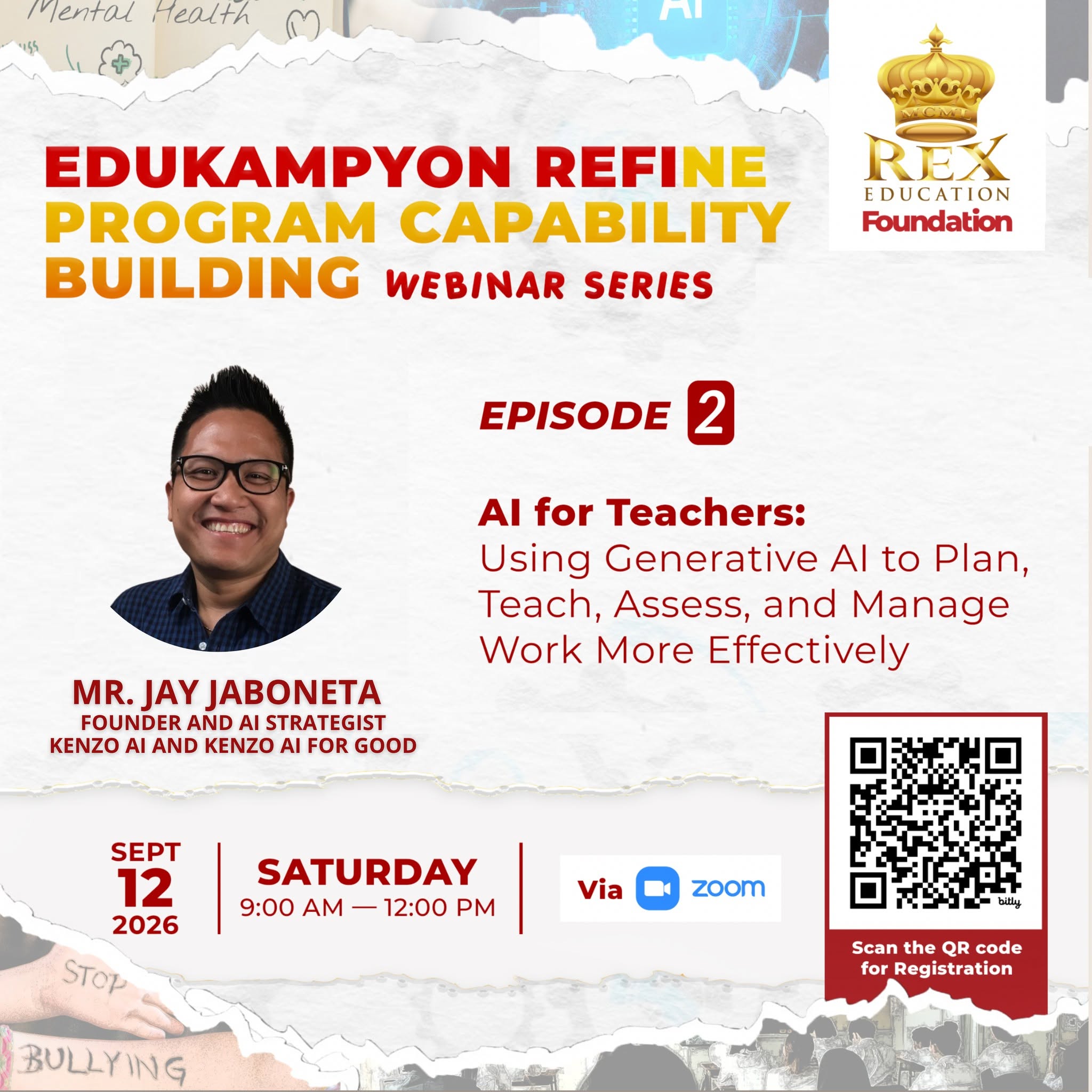
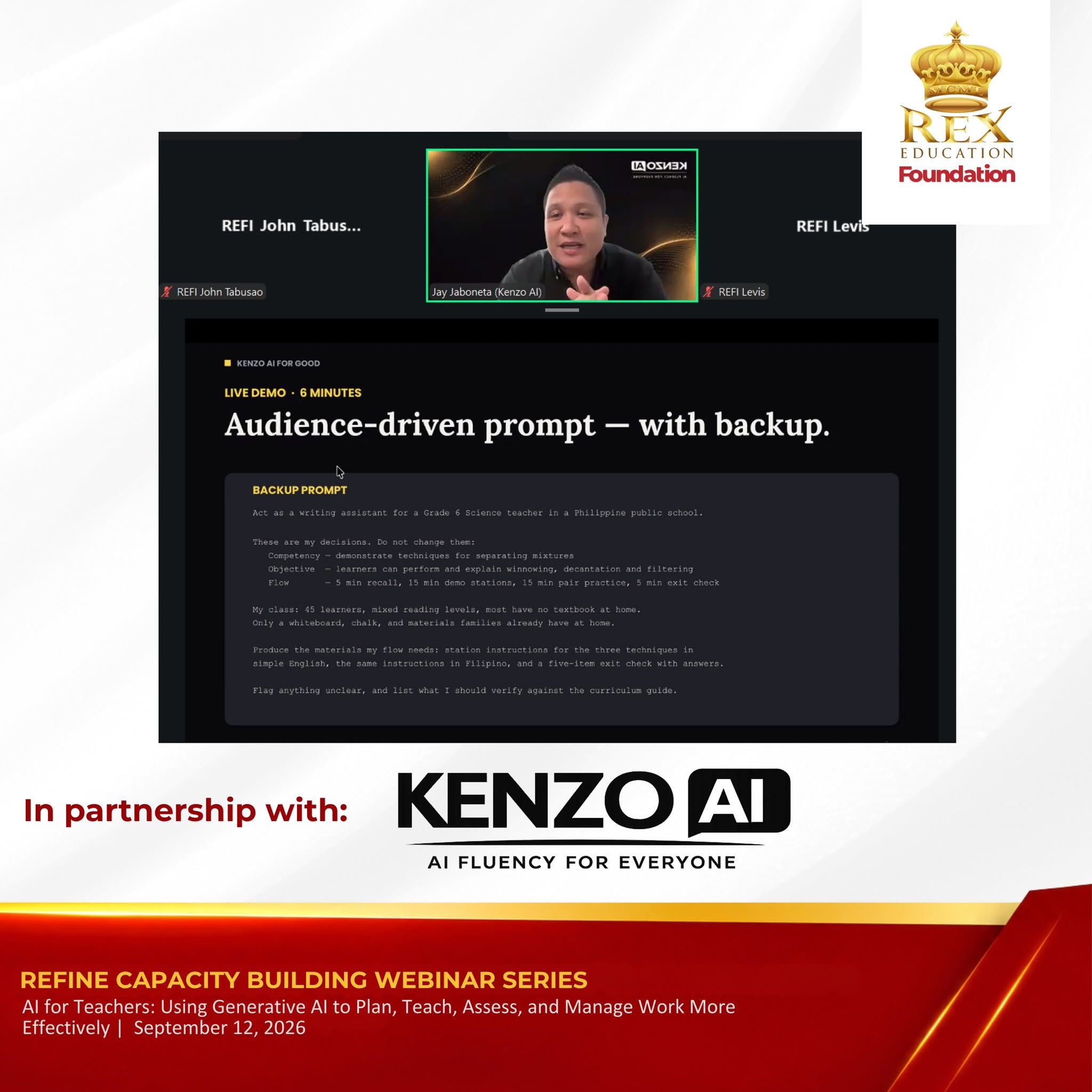
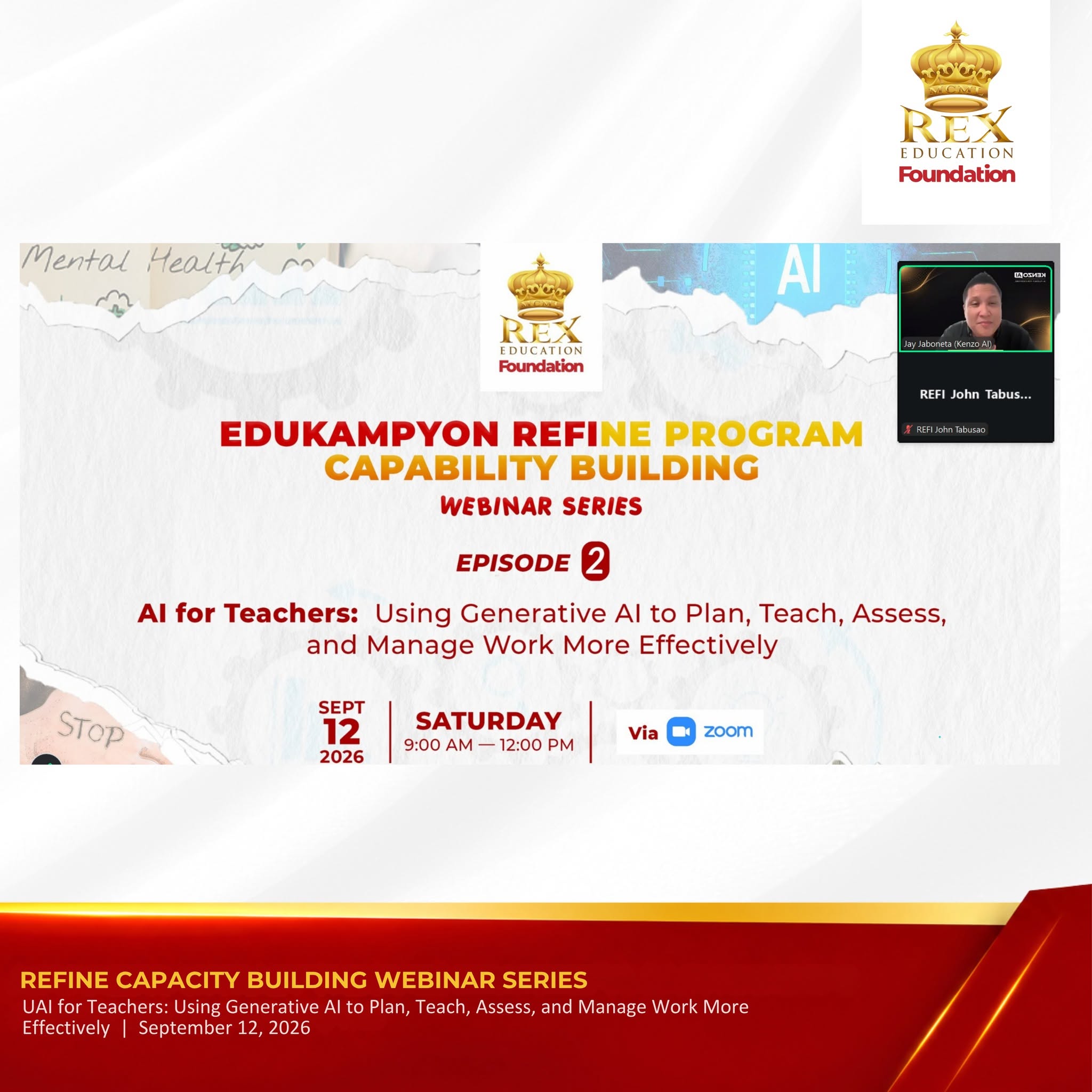
Hands-on learning for teachers and school leaders built around lesson planning, assessment, administration, communication, and responsible use.
Classroom-ready prompting and workflows
Human review and academic-integrity guardrails
School leadership and policy conversations
Role-specific practice rather than generic demos
Open Community Access
AI Access Clinics
Low-barrier introductory sessions where people can experience useful AI, ask practical questions, and leave with one workflow they can repeat.
No technical background required
Real tasks rather than feature tours
Safe-use practices introduced from day one
A bridge into deeper learning pathways
Kenzo AI for Good in the Field
This is what the work looks like.
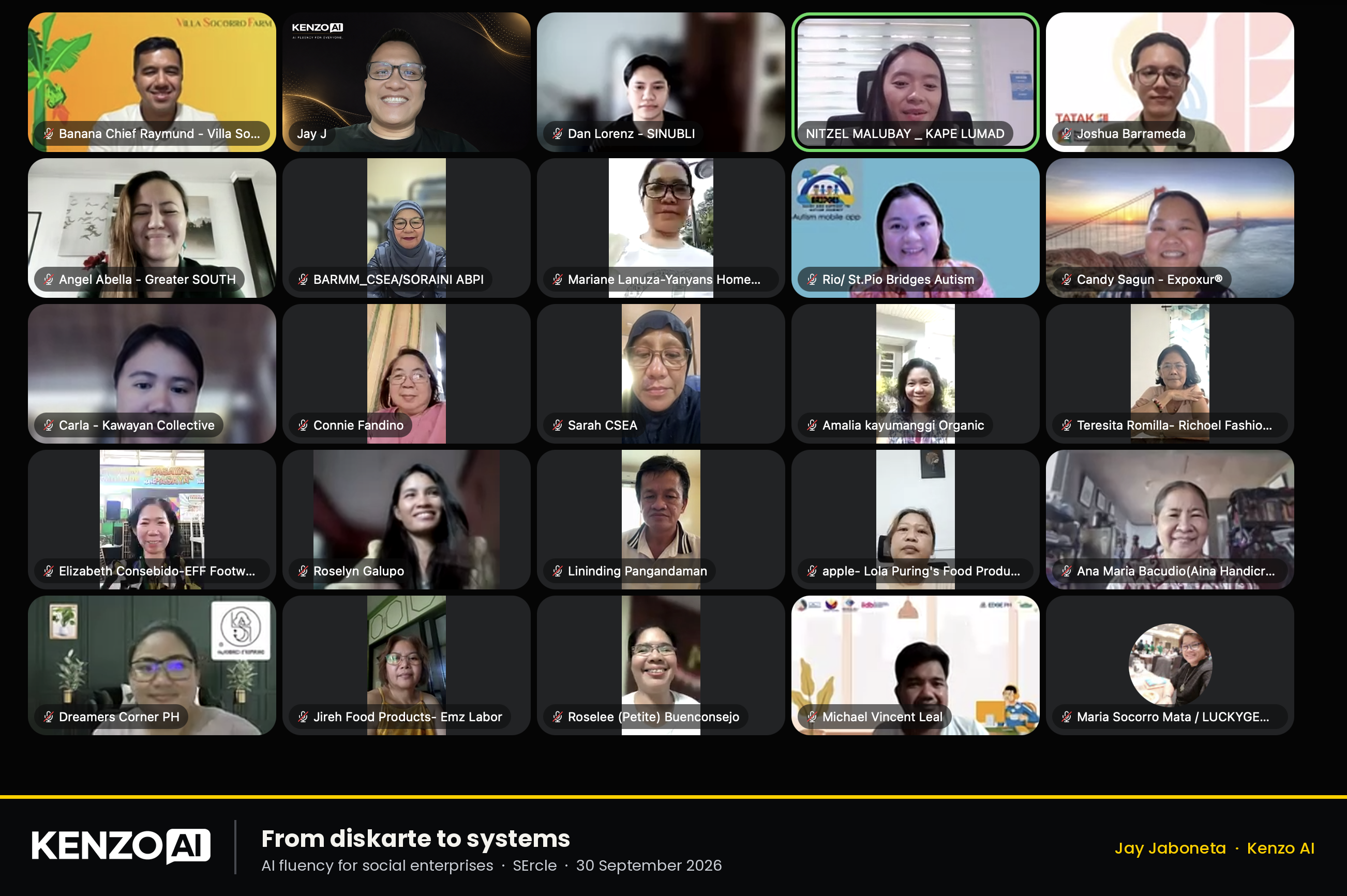
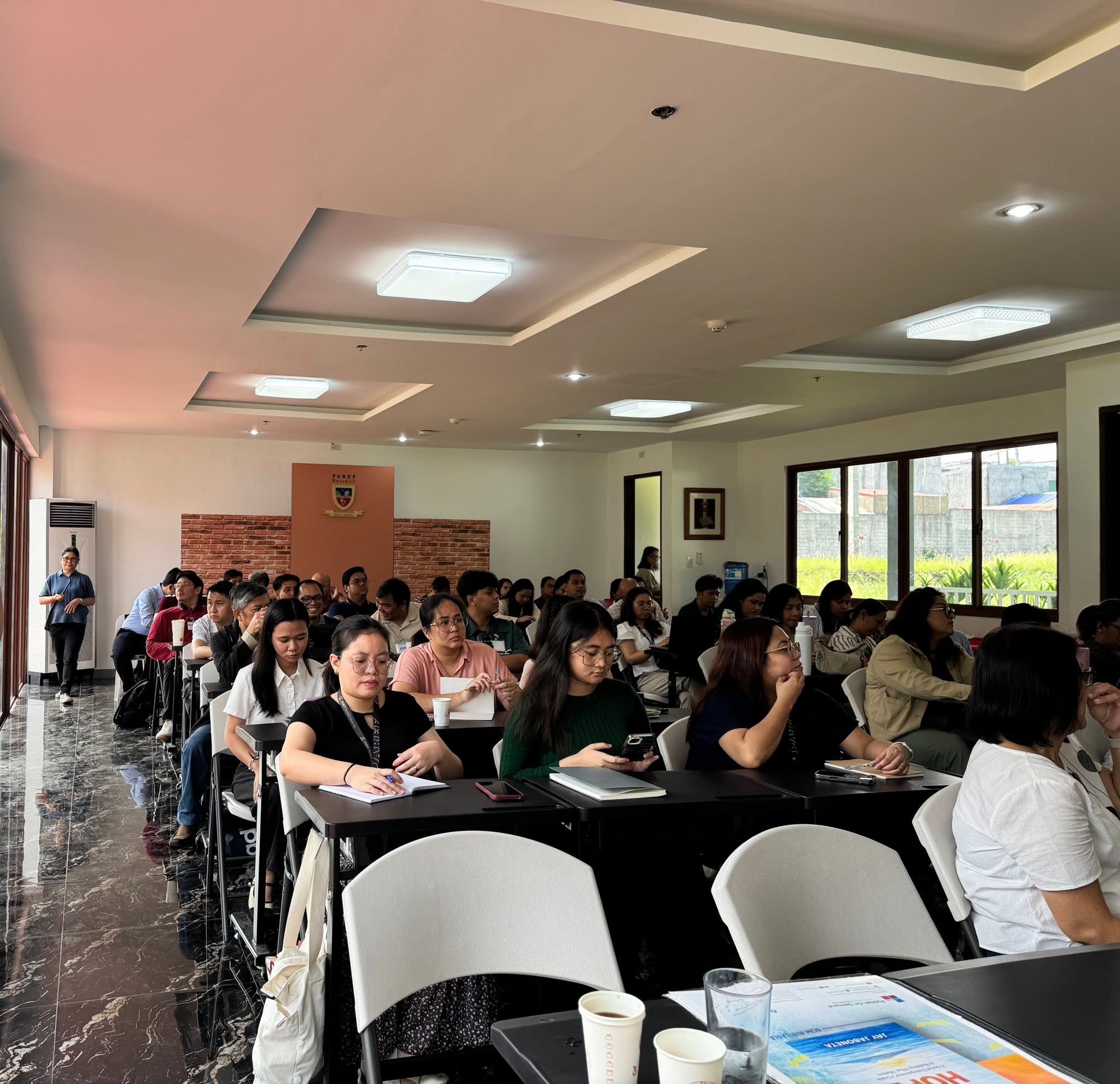
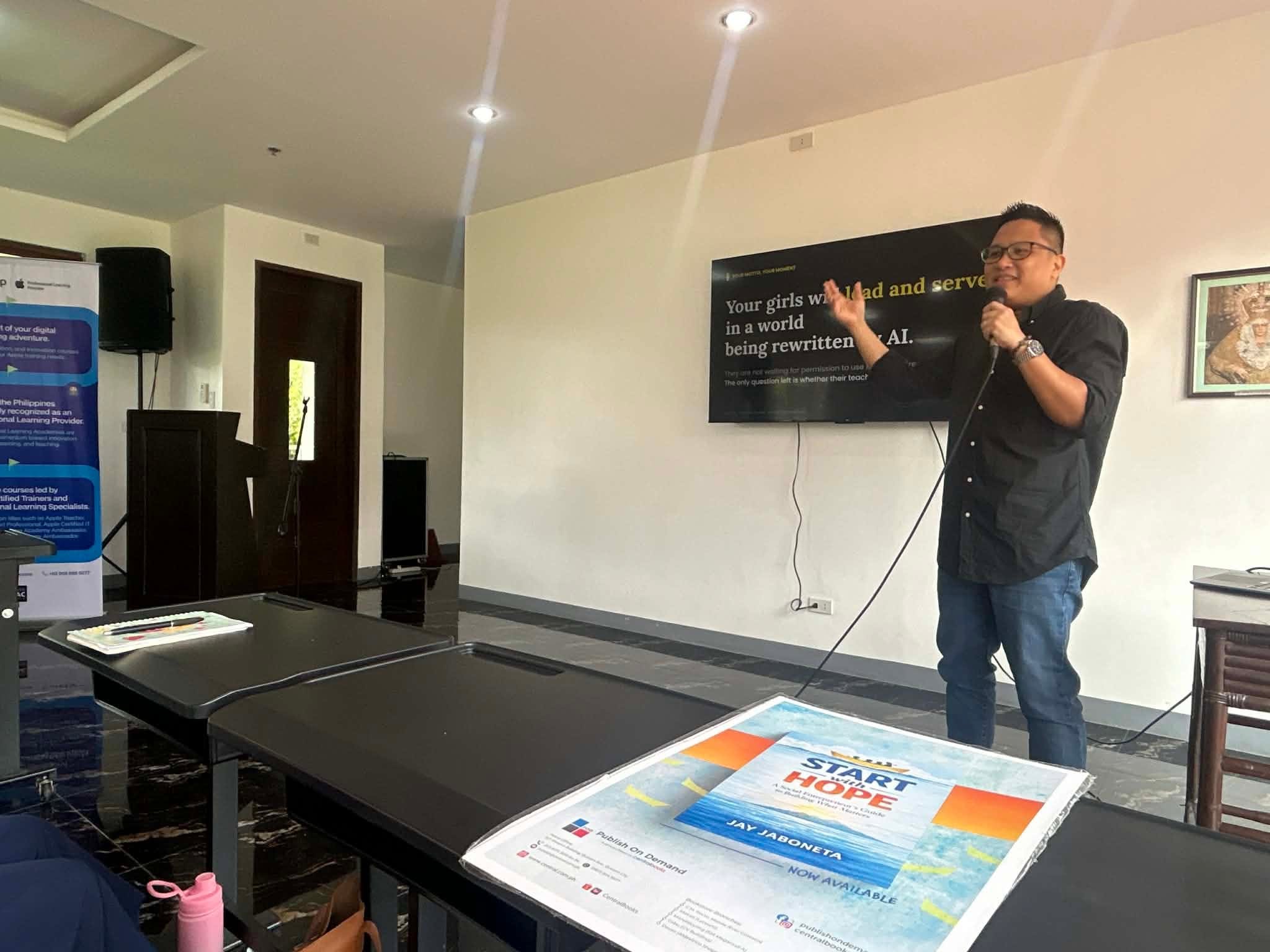
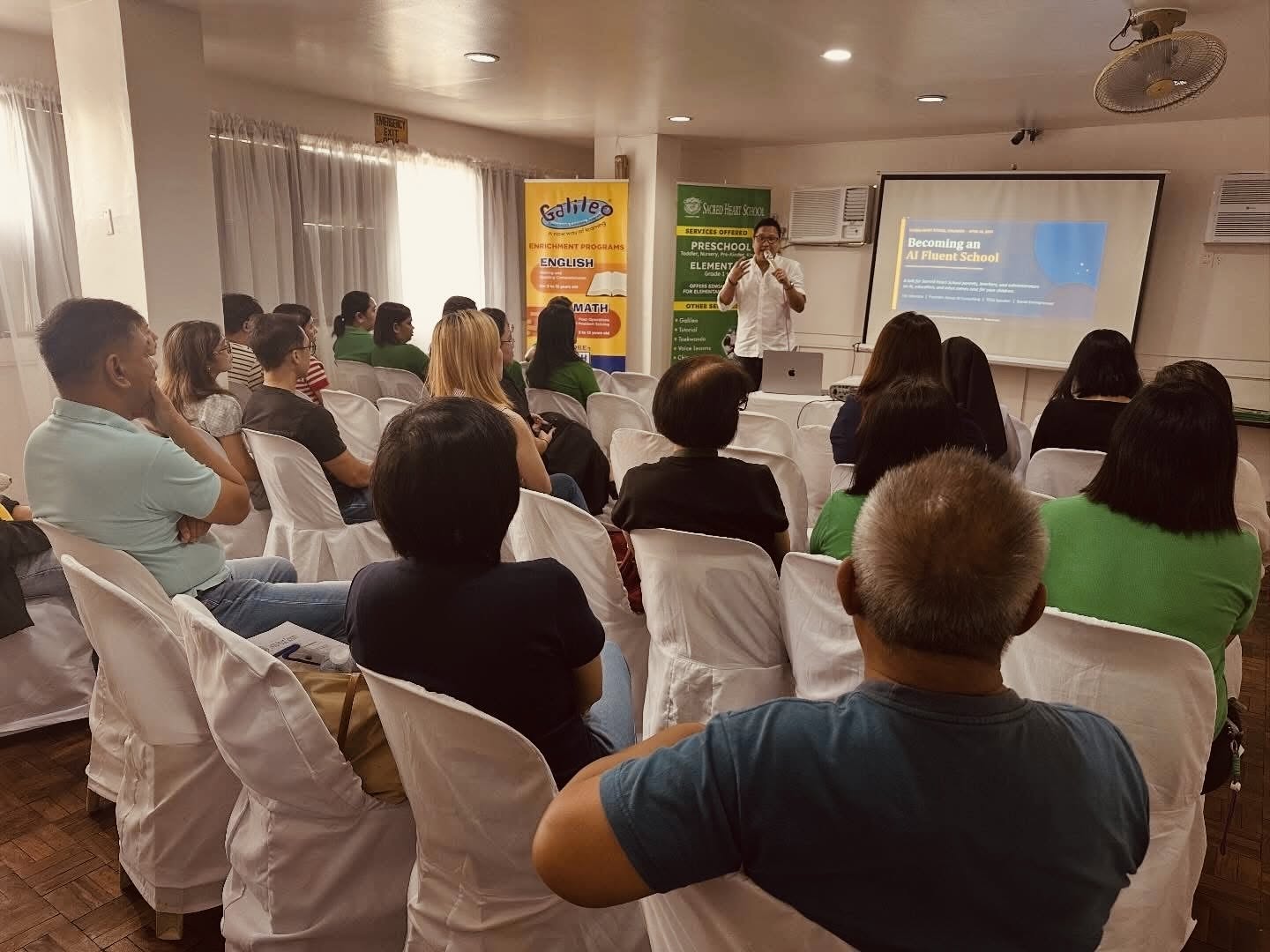
Real NGO teams, faculty rooms, and student cohorts — working through real tasks, building real capability. Different rooms, the same move from explanation to practice to internal ownership.
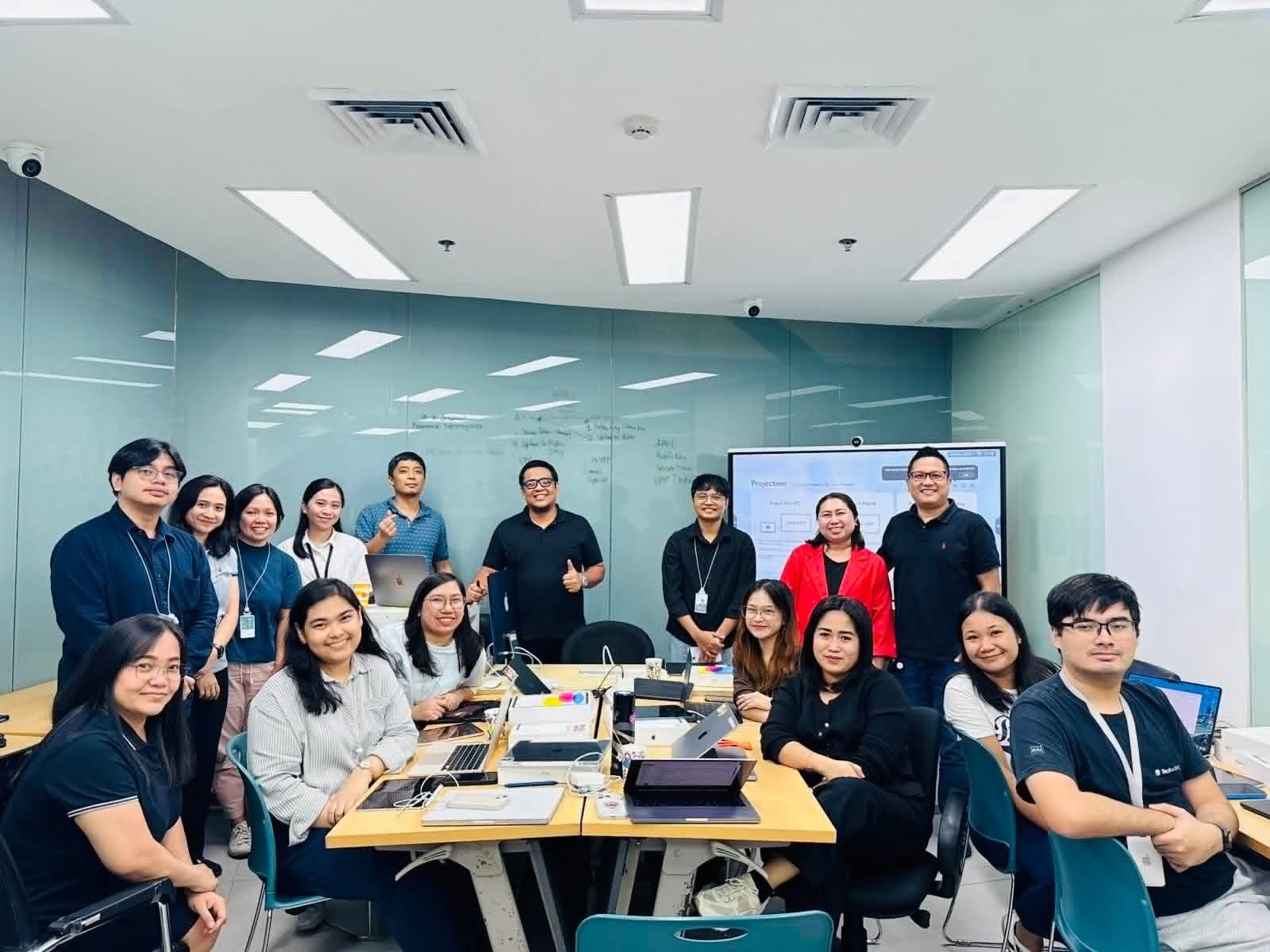
NGO AI Clinic
Trias Southeast Asia
AI Clinic — Philippines + Indonesia
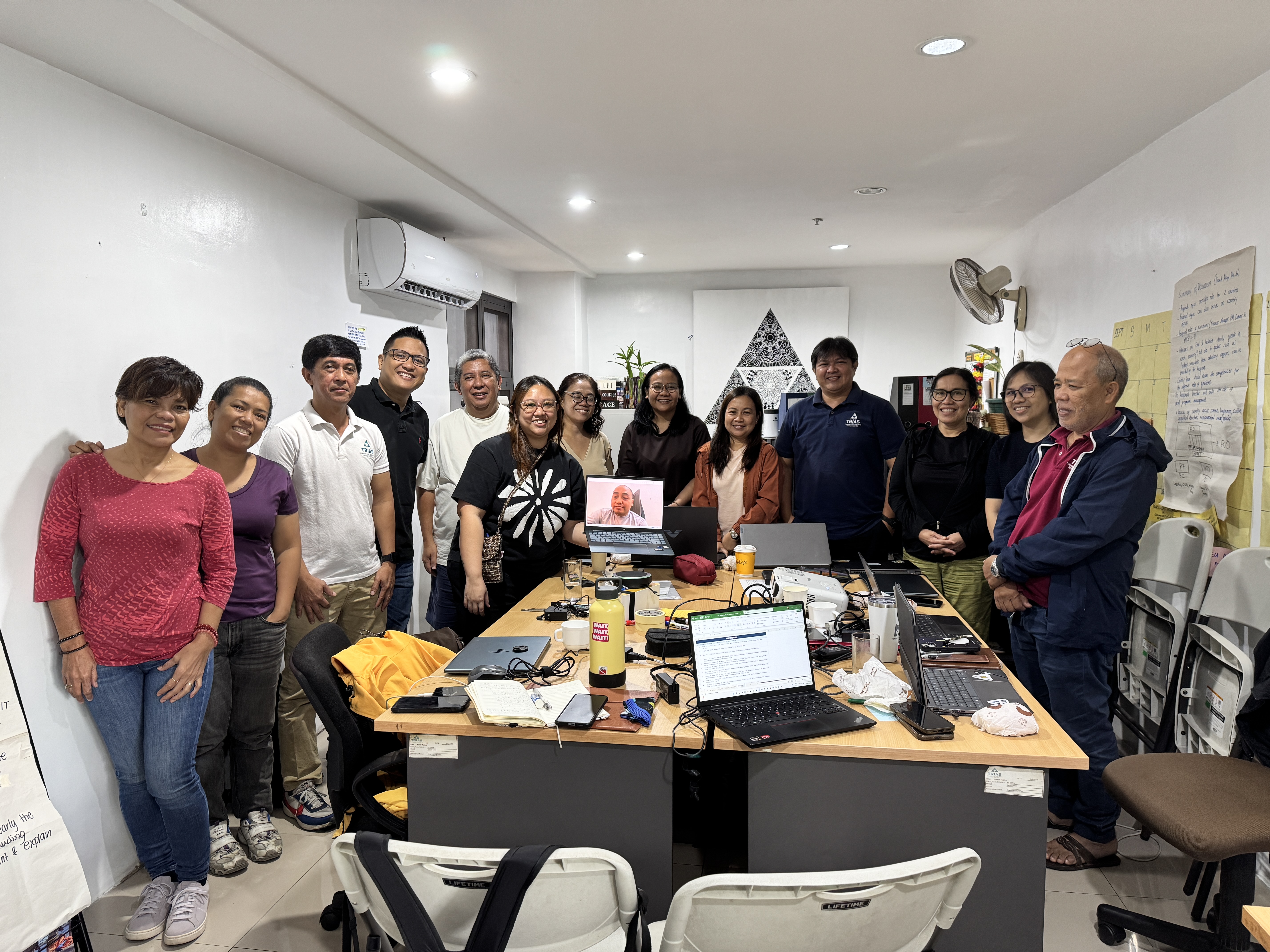
A 14-person distributed team from the Philippines and Indonesia worked through real NGO workflows — field notes, donor updates, research, and communications — with responsible-use guardrails built into every step.
Trias Southeast Asia · AI Clinic
University · Public Access
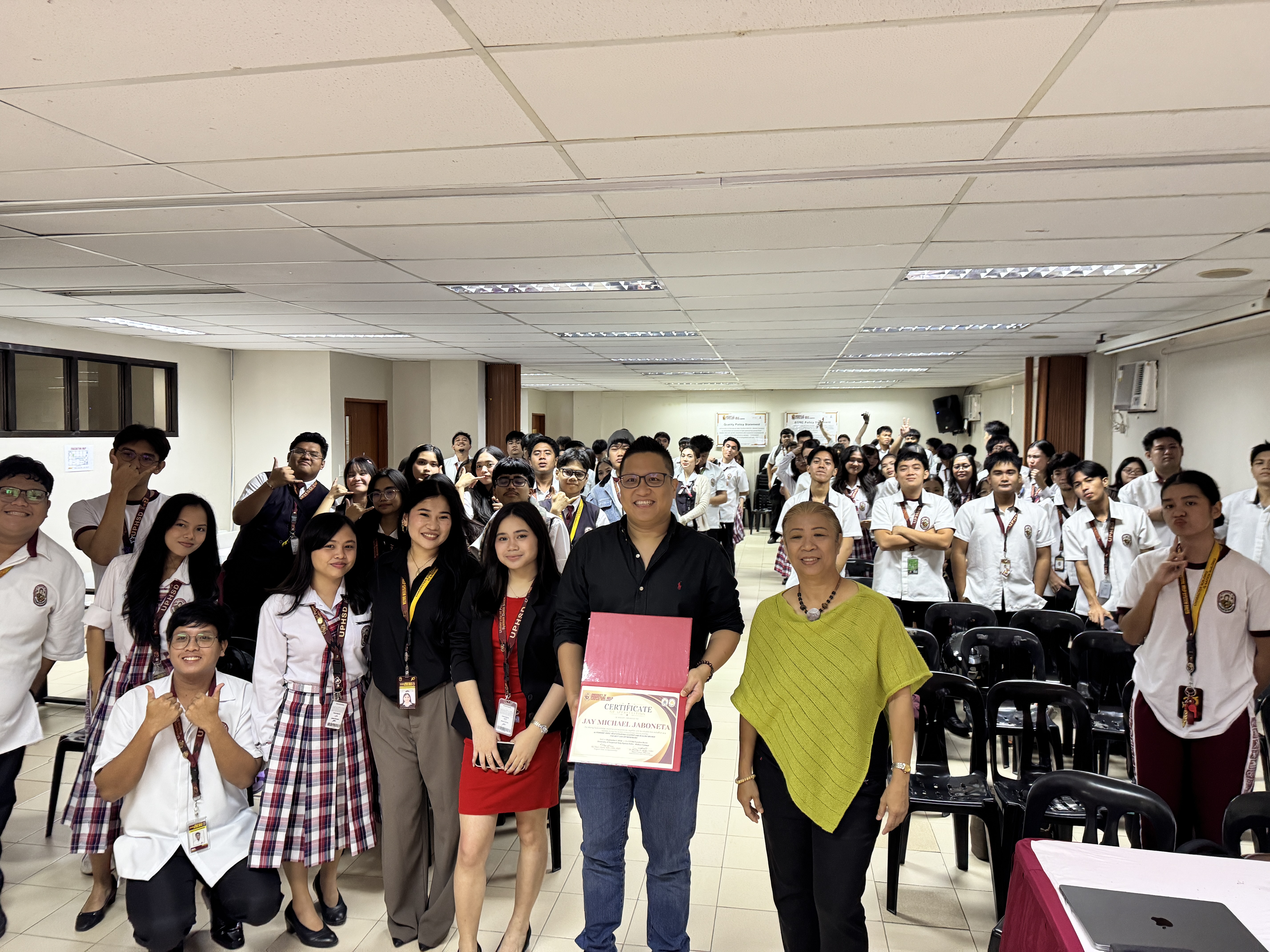
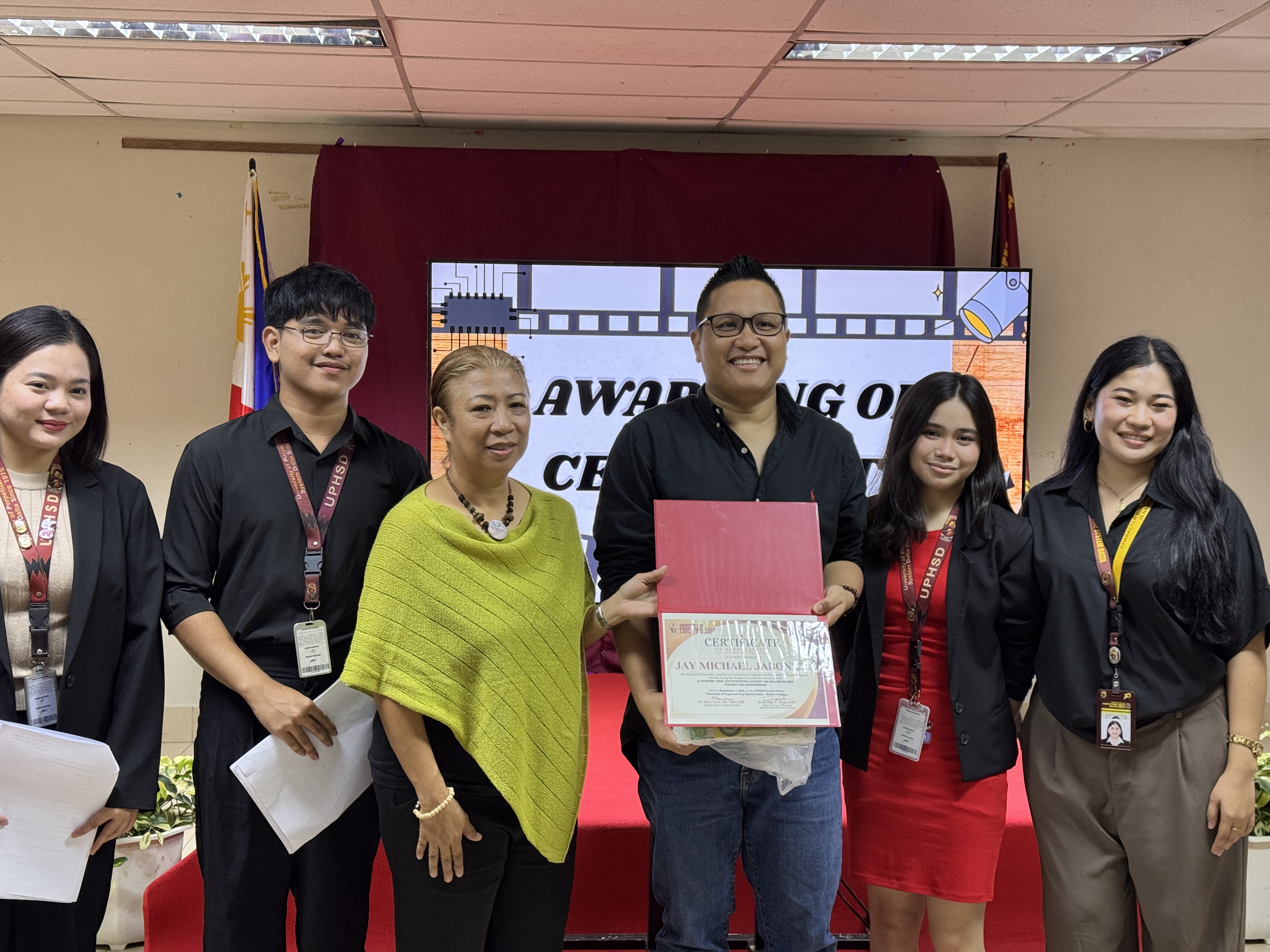
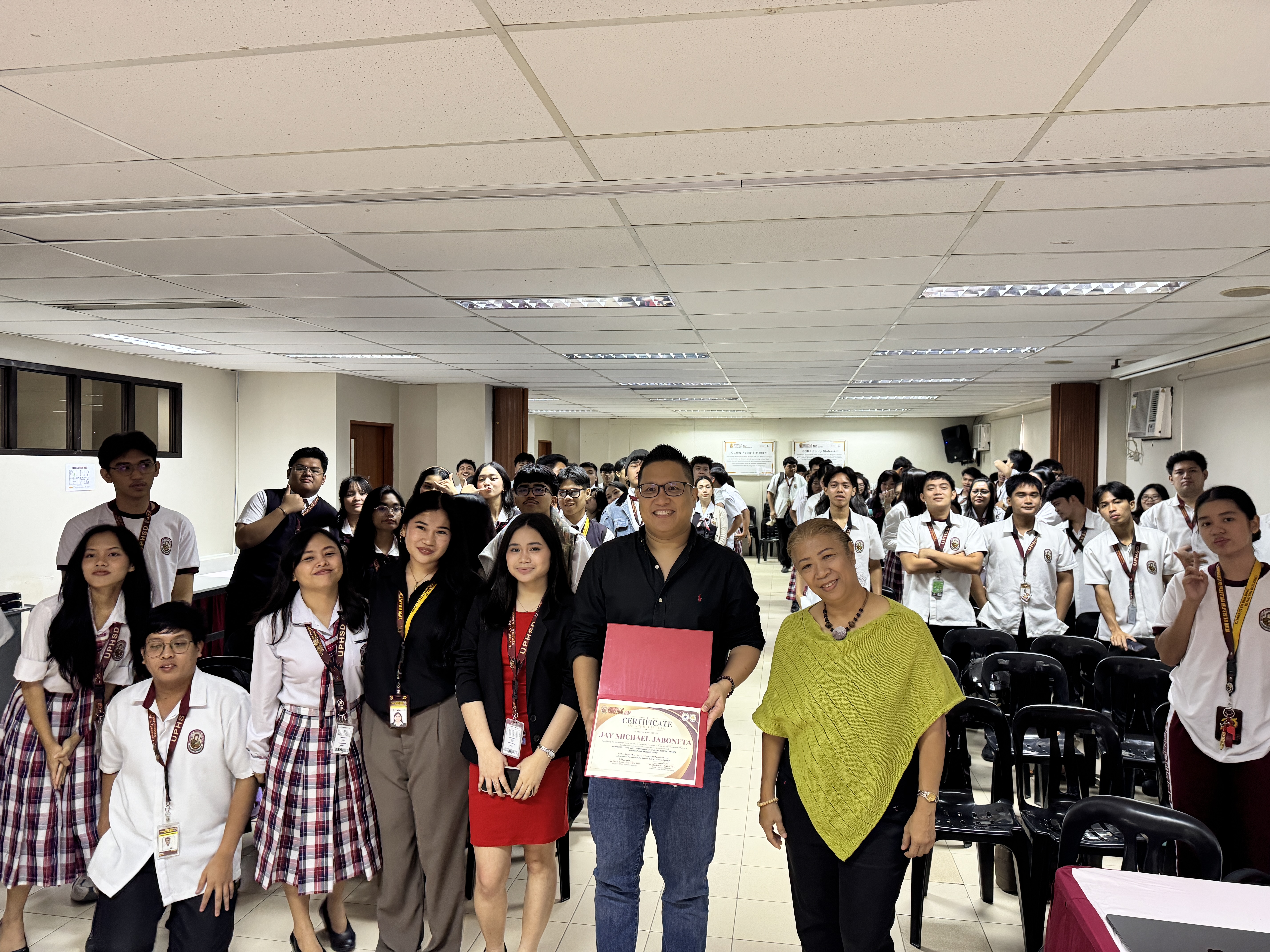
University of Perpetual Help System DALTA – Molino
AI Video Production Workshop — September 1, 2026
12 teams. One hour to learn the workflow. 30 minutes to ship something post-ready — scripted with Claude, shot on their phones, edited in CapCut or Canva. Some worked in the classroom. Others walked to the campus Learning Resource Center and made an ad for the library. No crew. No studio. No budget. Just diskarte.
Maraming salamat to Entrepreneurship Program Chair Elsa Daria, the E-Cell student organization, and Dean Dr. Mariane Atinaja.
UPHSD Molino · AI Video WorkshopCertificate of appreciation · UPHSD MolinoStudents · UPHSD Molino
The goal is never a great event photo. It is a team that can keep working with AI responsibly after the session ends — and a community that is a little less dependent on whoever can afford outside help.
The Access Ladder
Begin free. Build only as deep as the organization needs.
Qualifying partners can enter through a free AI Clinic or supported workshop. From there, we match depth to readiness — not to hype.
01
AI Clinic
A practical first experience: one useful task, basic safe-use principles, and a clear next step.
Free entry point
02
Team Workshop
Role-specific practice with real work so participants leave with workflows they can use immediately.
Free / subsidized
03
Policy + Adoption
CARE and ADOPT help leadership turn scattered use into shared guardrails, ownership, training, and review.
Supported pathway
04
Organization Capability
Internal champions, repeatable workflows, review cycles, and a practical operating model that survives the trainer.
System outcome
The Kenzo AI Operating Model
From spark to system.
A strong demo creates energy. A strong method turns that energy into repeatable capability, safer practice, and institutional ownership.
01
Spark
Show one task changing in front of the room. Make the value concrete, relevant, and close to the work people already do.
02
Practice
Move from watching to doing. People build role-specific workflows, learn to brief AI clearly, and develop judgment through repetition.
03
Guardrails
Define what belongs with AI, what data needs protection, what must remain human-owned, and what requires review.
04
System
Build champions, policy, review cycles, and shared language so capability keeps spreading after the workshop ends.
Simple Language, Serious Governance
Two frameworks turn responsible AI from principle into practice.
CARE gives teams four walls for responsible use. ADOPT gives organizations a path from unmanaged experimentation to an adopted, living policy.
CARE
Responsible AI framework
Four questions to keep useful AI work grounded in context, accountability, people, and fairness.
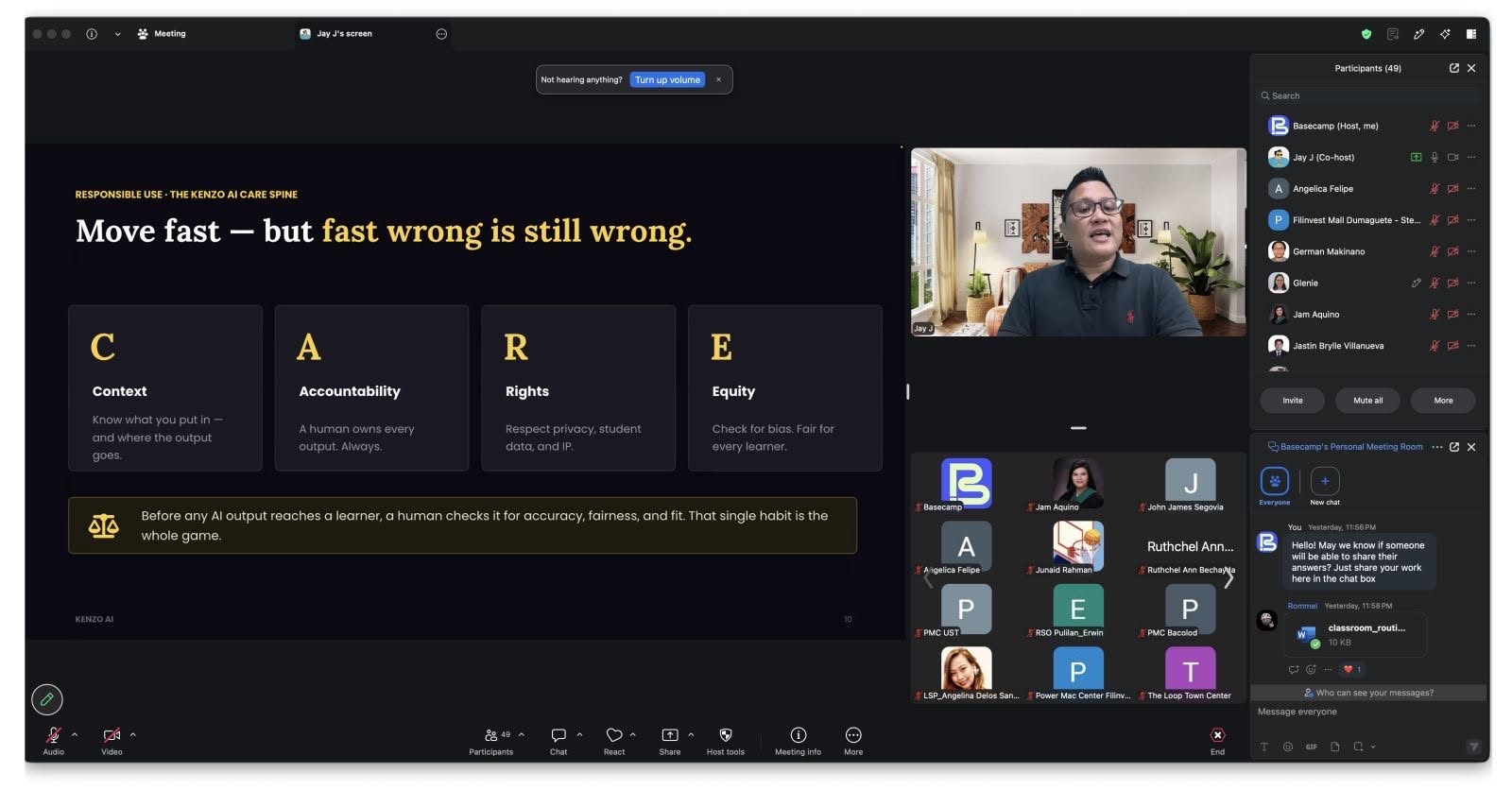
C
Context
Know what AI is good and bad at. Treat outputs as drafts to evaluate, not truth to inherit.
A
Accountability
A person owns anything consequential that reaches a donor, learner, beneficiary, partner, or the public.
R
Rights
Protect people and information. Sensitive beneficiary, learner, donor, and organizational data need clear handling rules.
E
Equity
Check fairness in outputs and access. A capability program should narrow divides, not quietly reproduce them.
ADOPT
Policy adoption process
Five steps to turn scattered AI use into a clear, teachable, reviewable organizational policy.
A
Assess
Survey current use and classify what information should never go into public AI tools.
D
Draft
Adapt a short starter policy with one named owner. CARE can provide the core headings.
O
Obtain
Secure leadership sponsorship early, consult staff, and create the right approval path.
P
Publish
Launch with training and role-specific use cases — not by emailing a memo people never operationalize.
T
Track
Set a review cycle, incident path, and simple measures such as confidence, quality, and time saved.
Workshop in Practice
From Spark to System: AI policy for NGOs.
Our NGO mini-workshop is built around a deliberate sequence: create the spark with a live task, connect it to risk and responsibility, then give leaders a concrete way to make AI policy organizational rather than theoretical.
Participants do not simply leave knowing more about AI. They leave with an internal case, an adoption process, a checklist, and a next step they can bring back to leadership.
The CaseA two-minute internal pitch for why the organization needs shared AI guardrails.
The SystemADOPT plus a practical checklist for moving toward an adopted policy.
The SparkOne useful workflow that makes the opportunity tangible without hiding the risks.
The Founder Thread
A long-running belief that access changes possibility.
Kenzo AI for Good was founded by Jay Jaboneta, a social entrepreneur, AI strategist, author, and ecosystem builder whose work has repeatedly centered on widening access — from education access through the Yellow Boat of Hope Foundation to practical AI capability for educators, schools, nonprofit teams, and communities.
Through the Yellow Boat of Hope Foundation, Jay has seen firsthand how access to tools and knowledge transforms communities — having reached over 200 communities across the Philippines through a movement that began with a single act of generosity and a Facebook post.
The through-line is simple: new capability matters most when it reaches people who can turn it into service, learning, opportunity, and wider community impact.
Kenzo AI for Good is the public-interest expression of the same philosophy behind Kenzo AI: make powerful capability understandable, usable, responsible, and accessible.
Tell us who you serve — and what your people need to do better with AI.
We review requests based on mission alignment, readiness, potential community reach, and available program capacity. Qualifying organizations may be offered free or subsidized participation.
There is no need to arrive with an AI strategy. A clear description of your organization, people, and work is enough to start.
✓
Public schools and education institutions serving community needs
✓
NGOs, foundations, social-impact organizations, and community programs
✓
Groups able to gather participants and provide a clear local use case
✓
Teams willing to learn responsible-use guardrails alongside productivity workflows
Fund Access, Not Hype
Help a school, NGO, or community move from first exposure to real capability.
Partners can sponsor clinics, workshops, learning cohorts, or responsible-AI adoption support. We design funding around a specific audience and capability outcome so support translates into something participants can actually use.
The Wider Ecosystem
One mission-driven layer inside a bigger body of work.
Kenzo AI for Good is where the Kenzo AI philosophy of practical AI fluency meets an explicit access mission for schools, nonprofits, and communities.